Writing Samples
I approach writing the same way I approach photography—with empathy, clarity, and a commitment to honoring the people and communities I'm working with. Below are samples demonstrating my range across narrative, analytical, technical, and social media writing.
“Pilgrimage: Bearing Witness to the Unexplainable”
Published in Pilgrim Magazine, 2021 https://www.pilgrimmag.com/finding-god-shaktipat-awakening-in-india/
Personal narrative exploring cross-cultural understanding, the ethics of witnessing profound experiences, and holding space for what cannot be rationally explained. This piece demonstrates my approach to storytelling: honoring subjects with dignity, making unfamiliar experiences accessible, and communicating with cultural humility and empathy—principles I bring to all my work, especially healthcare communications serving diverse communities.
“I didn’t come here to find God.” It is strange to transverse half the world overnight. I awoke to find the sun rising (or was it falling?) over the icefields of Sweden. The sun was breaking like a yolk from its shell just over the horizon line, casting warm shadows of pink and purple over the white and icy terrain below. Just across the window, another white orb seemingly gazed at me. Did she just wink?
The Full Moon reminded me that even across the world I would always have something from home.
I always have a bit of an existential crisis when flying long distances in an airplane. In this case, 21 hours of flight time. I am shockingly terrified of heights for such a rational, evidence-based person. Throughout my flight, I actively used my brainpower to continue a running dialogue on how a plane works, the statistical likelihood of a crash, the sheer number of planes flying at this very moment which will all make it to their destinations, and so on… Needless to say, I sleep very little and find myself quite tense.
When all of the rationalizations fail, as they do, I soothe myself with thoughts that I am just made up of atoms, like everything else around me, so technically I am not flying through the air, but I am held up by an infinite number of other things just like me. I am cradled in the arms of physics. So even if I go, I am not gone. Simply soaked back into the infinite.
I glance back over to the Moon, thank her again for her loving presence, and finally fall asleep.
I touched down in Mumbai around midnight. Despite it being early January, it was hot and muggy. I was told to wait outside the airport for my two teachers, David and Adriana, who would be leading me and 14 others on this three-week spiritual pilgrimage through rural India. I carried a camping backpack with my brand new yoga mat attached to it and my camera gear slung over my shoulders. I sat down at a table to wait for my fellow God-seekers and ordered the first of what would be the beginning of a slow-growing addiction to masala chai. Served in small metal cups, it is undeniably sweet with subtle hints of cardamom, cinnamon, fennel, and other spices unknown to my senses. Western chais are nothing like it and without being dramatic, of all the horrible things Starbucks has done to our senses, this is one of their greatest mistakes.
I would be lying if my original intention to fly across the world was to find God; it wasn’t. I was here to document a spiritual Bhakti yoga retreat with my camera. Yoga has eight limbs, only one being an asana (physical) practice. To clarify, Bhakti is less downward-dog yoga and more go-sit-in-a-cave-and-go-find-God yoga. Like all good Pilgrims, my primary motivation was to find adventure, get myself out of the sleepy hole of an Oregon winter and into the blazing sun of India, to change my color palette from dismal greys to colors inspired by tropical birds and plants. A place where cows wandered the street belonging to nobody, yet thoroughly painted from horn to horn with flowers gracing their long necks. I longed for something novel, so I could keep my promise to my ego to never remain stagnant or become boring.
I suppose the Universe had more in store for me.
Our trip began in Mumbai on the seventh story of an old hotel. This would be the most modern place we would stay throughout our journey. It came complete with an English toilet, a luxury compared to a hole in the ground, and a shower with running water. (The rest of our baths were simply buckets filled with hot water.) One wall was a solid window that looked out onto the busy world below. The buildings that could be viewed outside appeared to be worn by time and pollution. There was so much life below. More life than I had ever seen before. So much noise. The honking of cars was incessant. Our teacher told us that every time we heard a honk, that was how much God loved us.
God must have loved us a whole lot.
Before sunrise, Mumbai awakens quietly. The market vendors roll out their mats while the chai maker waits to make his tea until he has performed puja (an act of worship) to the altar at his small stand.India is beautiful like that. Someone might say India is filled with rituals. Another might say it’s filled with devotion. I say that it was remarkably refreshing to see all of society taking time to give appreciation and gratitude for something beyond themselves. As an American, if I may be so brazen as to make a vast generalization (however correct), we are perpetually thinking about being more productive, more efficient, and more consuming. We are consumed by the practical and yet here, time is taken for the mystical. At least, in the old India. The India that the Western mind has not yet touched. If America were a straight line, a box filled with hard edges and efficiency, India is its sister land where femininity reigns. Circular, dynamic, completely on its own time. A mandala.
In my opinion, a spiritual pilgrimage is more like a spiritual bootcamp. Nearly every morning we would wake up knackered just before sunrise, bathe from a bucket of water, silently slip to our community room to drink chai, meditate, and engage in our first Satsang—a spiritual discourse of the day. We traveled from city to town to village to visit temples, climb mountains, and sing the kirtan. If you haven’t heard of kirtan before, it is undeniably one of my favorite practices in the Hindu tradition. It is a call and response, chanting in the language of Sanskrit to thank the gods. It is usually accompanied by an instrument called the harmonium, which is a combination of a small lap piano and an accordion. The thing about kirtan that makes it different from any gospel choir is that it’s not about the sound of your voice (good or bad) but the feeling of your voice in your body. The vibrations of the sounds moving through your chest and up to your lips. If singing brings you to the present, kirtan nearly demands it of you. There is no place that I touch this God word more. And I want to be clear, or as clear as I can be, about what I mean when I use the word God. God to me is a feeling more than it is any benevolent entity in the sky. It is a swelling of the chest, an emotional cry of both delight and despair from the deepest parts of oneself.
It feels like love—Love with a capital L.
Perhaps that is why I came to India. To suspend my disbelief. To find a way to integrate my scientific logic with a spirituality that seems so integral to my personal well-being. Perhaps we are here to embrace that big ole love. The unconditional kind. The one that holds you in its embrace and bestows upon you kiss after kiss in the most tender moments. This God, this feeling, takes you out of the trance of “you and me” and becomes something so much more than that. Something interconnected and massive like the big soft quilt your grandmother made, encompassing everything we have ever known. This God could also be described as an evolution of consciousness.
I feel my story of India would be remiss if I did not tell you a story that challenged my disbelief more than any other. We traveled to a small town called Trimbakeshwar. Its known for its temple which held Nivrutti—the Bhakti saint, poet, and philosopher. It is said that when he was ten years old, he and his family were confronted by a tiger. While the family escaped, they were separated from one another. But Nivrutti hid in a cave on Anjani Mountain. This is where he met a guru named Gahaninath, who gave him instant enlightenment. Nivrutti then climbed back down to the village of Nasik and anointed his brothers and sisters, bestowing them with great powers. Together, they traveled throughout India, enlightening others with their presence. They were beloved. At the mere age of twenty-four, Nirvrutti gave the ultimate sacrifice and chose to become a living Samadhi. Samadhi is a state of intense concentration achieved through meditation. In Hindu yoga, this is regarded as the final stage, at which union with the divine is reached. Nivrutti climbed down into a tomb surrounded by gifts and blessings from all those that loved and honored him. They slowly moved a shrine above his head, as he promised to live forever, emanating energy to all those who touched his busk, so they too could know enlightenment. Believers say he is still alive down there. I had my doubts. Nonetheless, a temple was erected around him, and it is in this place where someone else’s story begins.
My friend Michelle is a petite woman with pearled skin and long dark hair in her mid-thirties. She is from New Jersey and works as a copywriter for denim brands, while also attending graduate school to be an art therapist. It was around 8 in the morning. A spiritual festival would begin later that day and the village was preparing for it by erecting a series of gorgeous pink silks into the air. Needless to say, the moment had to be captured.
As the shutter of my camera clicked, I heard a scream—an unending, piercing scream of pure panic, of terror, of sadness. I turned to see the scream coming from Michelle’s mouth, who was stumbling out of the temple with her boyfriend by her side. I took a quick scan of the environment and besides Michelle, nothing seemed to be amiss. Her screaming continued as the locals began to take notice. The young Indian boys were amused, giggling, excited about something so out of the ordinary as a young white woman shrieking in their temple. Instantly, the group came together. We circled around her to keep out the prying eyes. And the older mother figure in the group scolded the young boys for their gawking. It must have lasted only thirty seconds, but it was one of those moments that stood still, stretching out endlessly.
Through my Western psychology lens, my first thought was a panic attack. Albeit, this was the most intense panic attack I had ever witnessed and I’ve had a fair share of my own. As we walked home, I expressed my thoughts. David, our teacher, said “Shaktipat,” explaining that Shaktipat is an immense amount of spiritual energy—like a spiritual version of a defibrillator to the heart. It awakens you. I had to know more because there was no doubt in my mind that something viscerally occurred within my new friend. It was only later that I spoke to Michelle about her direct experience, which I’ll share in the first person to articulate her experience.
“It began when I was meditating in the temple. It was almost as if I fell into a trance. Everything became slow, slower than slow. I felt as if gravity times a million was pushing me to the ground and I felt deeper in meditation than I had ever been before in my life. What I noticed most was pulsating energy. There was energy emanating from my heart that felt as if it was physically pushing my body backward with each beat. That energy then traveled through my heart and out of my head. As cliché as it sounds, it was very clear to me that it spread outwards in the shape of a lotus. It was then I heard a very clear voice that said to me, ‘You are about to be reborn.’
I was sitting next to Matt when David said we needed to leave. I didn’t want to. I felt that if it wasn’t for the energy of the group, I wouldn’t have been able to go, but somehow it propelled me. As we were walking through Nivrutti’s final resting place, David mentioned that the pillar beside us was a part of the original temple. That’s when I heard the voice again. A voice inside of my head said, ‘Touch it.’ I did as requested. As my fingers grazed the wooden etchings, I was almost thrown back by shockwaves of energy. I can’t explain it, but it was almost as if every cell in my body was exploding. I turned to Matt to say something. Something like, ‘Wow,’ but all that came out of my mouth was a laugh that I could not control. That’s when the fear overcame me. My uncontrollable laugh turned into an uncontrollable scream. A small self-conscious part of me knew I shouldn’t be screaming in a temple. I have never liked the attention to be on me and I certainly didn’t want it now. I knew I had to run, so I did. The scream kept coming. It was as something had to get out. It was as though something had to leave me. I fell out into the morning air and I felt the group circling to hide me from the outside world. And then, it vanished: the scream, the imploding energy. There was nothing left to spill out of me.
As I came to, I saw a cow moving beside us. She was limping. In that moment I felt if I could just reach out to touch her, I could heal her. But the group was ushering me to a quiet place, and I fell into them, leaving the cow behind.”
After this event, Michelle was quieter, more introspective. She told me that the more she tried to explain or rationalize what happened to her, the farther away it seemed. So she doesn’t speak about the experience with others. How could they understand? I could understand that. If I hadn’t been there to witness it, if I hadn’t known Michelle before that moment, I would have remained a skeptic myself. But I couldn’t. Something happened to her that was undeniably real. And not just to her.
David told us that he once spoke with a Hindu doctor who said he could make no claims to the metaphysical origins of an event like this. But he could tell David that this type of thing usually occurs in young, recently married women. In India, it is common practice for newlyweds to move into the husband’s parent’s home. The women are to do the bidding of the household and, as you can imagine, they have very little autonomy to make their choices or have their voices be heard. Psychologically, this can cause a break. But it is odd, don’t you think? That this phenomenon is common enough for others to know of it? This same type of event recurring again and again. It makes you wonder if there is something else going on here. Something science and our rational brains don’t quite understand yet. A firm reminder that curiosity and humility are integral parts of the foundation of science and, yet, sometimes we forget that in our judgments and our need to be right.
There are so many more stories I could tell you of devotion, of spirituality, of growth. How grace found us in a myriad of ways. In temples, in ashrams, on top of mountains where blind men climbed the endless steps to give homage to their gods. Grace found us in a five-day vow of silence where I felt completely satiated with my own company, something that I never dreamed could be possible. I came home after three weeks in India. Arriving back at the airport in Denver, I heard the first rumblings of a virus that would lock us in our homes, isolating us from so many people and things that we love. But I now held my own secret. A new way to view the world that connected me to the infinite. When I arrived home and finally fell asleep cuddled next to my love, I dreamed of a sea of color and all I felt was an insurmountable joy.
“The Future of Race: Understanding Systemic Inequity”
Academic essay, 2018. Explores the historical roots of racial disparities in America, including how discriminatory practices like redlining denied healthcare access to communities of color. Full essay available upon request.
Race has old, violent and sweeping historical roots in this country. It began when the first European man stepped foot on the long shores of our Eastern coastline and came face to face with the natives of America and has continued ever since. It expanded with the Atlantic Slave Trade, a time when African men, women, and children were stolen from their homeland and brought to America on suffocating ships, and then sold to the highest bidder on foreign land where they were granted no basic human rights. In this paper, I will address the history of racism in the United States, how micro social practices and symbolic interactionism has perpetuated racial disharmony, and address the social changes needed to change the future of race in America.
Throughout the 19th and 20th centuries, the majority of white Americans believed that they were racially superior. This idea was supported by white elites who benefited from this false social construct. Defining “blackness” as soulless savages served the political interests of the property-owning class of white men and justified the immoral enslavements of black people. It ultimately served the economic benefit of slave owners and all others who profited and benefitted from the slave-labor economy. This, in turn, kept the social narrative alive that those with darker skin need not be treated as equals to their white counterparts. African Americans, Native Americans, Latinos, Asian Americans, and women were excluded by discriminatory laws and practices. Policies were created by and for the white man which preserved the structure of power, reproduced white privilege and kept rights and resources in the hands of white control. They did this in innumerable ways. One example is through the practice of redlining. Redlining was defined by sociologist John McKnight in the 1960s to describe the discriminatory practices of severely limiting service to customers in particular geographic areas, often determined by the racial composition of the neighborhood, (McKnight). In laymen terms, Black Americans and other minorities were unable to access basic rights such as mortgages, loans, and even healthcare, because of racist policies and attitudes. With little access to these services, minorities suffered from low property values and landlord abandonment. These discriminations greatly diminished their ability to develop wealth and thus limited any chance of accruing influence and power, reaffirming the status quo, and limiting the voices of the marginalized.
Another example of racial discrimination was in the practice of segregation. Black and white people were forced apart in nearly all public social institutions, including school systems, the military, banking systems, restaurants, and public institutions. The minorities received the lesser of all things, and through the use of violence, were forced into poorer education systems, impoverished neighborhoods, and subordinate positions within our class systems. Black mothers raised white children and quickly forced back to their sides of town on the back of buses. Even in modern times, African-American children continue to be educated by institutions that have very little resources and discriminate against them at a higher rate than any other race.
As defined by Crossman, “symbolic interaction theory analyzes society by addressing the subjective meanings that people impose on objects, events, and behaviors. Subjective meanings are given primacy because it is believed that people behave based on what they believe and not just on what is objectively true,” (Crossman). This has greatly shaped our cultural understandings and interactions on race. Race is defined mainly by political struggle and the definitions of race and racial categories shifts over time as the political terrain changes. As stated previously, during the birth of our nation and the era of slavery, definitions of “black” were anchored on the belief that African-American were dangerous savages - “wild, out of control people who needed to be controlled for their own sake, and for the safety of the public,” (Cole). In contrast, there were white Christian abolitionists who believed that this definition of blackness was false, and many black abolitionists, such as Frederick Douglas and Harriet Tubman, used their talents and influence to take back the black narrative and assert both the intelligence and humanity of their communities. Much of the revolt still continues today to reshape the narrative that minorities are somehow inferior. In modern history, Black Harvard students have created a photo campaign to highlight their experiences on campus and to stand up and assert that “We, TOO, are Harvard,”(ITooAmHarvard). These students are making a resounding statement that they are every bit a part of Harvard as their white colleagues and as black students, deserve to be recognized in that space. These acts are radical because it has the capability of transforming how black-Americans are perceived, and how black-Americans can perceive themselves.
Alternatively, in our modern era, a louder narrative plays out over our television screens. Black people and minorities are vastly overrepresented on our news media as gang members and the perpetrators of violent crimes. This is one way how thinly veiled racism has made itself into the cultural landscape. An average American spends over four hours a day watching television and they are inundated with images of black and Latino males being paraded with handcuffs and flashing lights on the screen. This exacerbates the trope that minorities are dangerous, and ought to be feared, contained and imprisoned. These injustices have a trickle down effect into all parts of our society. How we define blackness directly shapes how society relates to people of color. Through practices like the “the culture of fear” produced by the mass media and political agents, citizens continue to interact with minorities in a way that signifies their inferiority, and in turn, once again, reproduce racism in their every day micro-practices, which shapes the next generation who learn to mirror their circle. These systemic racisms directly shape a minority's social reality and social possibilities. In an example, being born black increases your likelihood to go to prison. Very often this is due to their lack of opportunity and resources, as well as being labeled deviant and inadequate since birth. Psychiatrist Frantz Fanon states, “In a white society, such an extreme psychological response [from black people] originates from the unconscious and unnatural training of black people, from early childhood, to associate "blackness" with "wrongness". That such unconscious mental training of black children is effected with comic books and cartoons, which are cultural media that instill and affix, in the mind of the white child, the society's cultural representations of black people as villains” (Fanon). In sociology, we refer to this as labeling theory. “Labeling theory states that people come to identify and behave in ways that reflect how others label them,” (Crossman). This inferiority becomes internalized, and minorities begin to act in the ways that society expects them to act. Additional injustices can be found in times of political unrest and economic downturns. A culture of racism uses minorities and people of color as cannon fodder for the social distress being experienced. Throughout our history, these stereotypes have been used as a political maneuver to keep the white man in power and use minorities as scapegoats.
"Essay on Building Dialogue Across Difference" (2019)
Written for graduate program application. Demonstrates my ability to write about complex social issues with nuance and empathy—skills essential for healthcare communications serving diverse, underserved communities. This piece reflects my approach to all my work: seeking to understand different perspectives, building bridges, and creating space for dignity and dialogue.
Of the many social problems of significance to me, the culture of hate that currently pervades every aspect of our social discourse has the most catastrophic effects on society since it directly affects funding and services to many marginalized groups (e.g., immigrants, LGBTQ, the uninsured, women, welfare recipients, individuals with disabilities). Clearly, the transformation required to address this problem is broader than what can be stated in this essay. There are numerous variables that lead to and exacerbates a culture of hate, and how hate manifests itself in society. For the purpose of this essay, I will address the macro levels of this problem in general terms and suggest possible solutions that begin at the mezzo level.
At the state and federal level of government, gridlock plays out in the form of partisan politics that predominates our news cycles and social media at record levels. An “us vs. them” mentality has developed and even when there is room to agree with the “other side” it is perceived as a betrayal. This polarization has critically destructive effects on the ability to move forward with nearly any social programs. It does not allow any opportunity for any dialogue, which exacerbates distrust of “the other.” This is often demonstrated through bigotry based on a perceived loss of power and a fear of losing something believed to be essential to one’s existence. These notions (real or perceived ) are often based on core beliefs that underpin a person’s life: reliance for income from a specific industry, a threat to one’s religious beliefs, or fear of losing one’s cultural value. The alarming rate of alt-right groups organizing in politics and the rise of populist governments in the United States, Britain, Italy, Poland and Hungary only exacerbate the belief that certain sectors of the world are losing ground - mainly, white working class. While their fear creates bigotry, homophobia, and racism if we simply dismiss them, it isolates them and creates no space for dialogue - it creates more discord and limits both sides ability to progress.
I have experienced this first-hand from both sides of the aisle growing up in Texas. As a liberal female born to a very conservative family, I straddle two worlds and many times found myself mediating the different perspectives of those involved. If I have learned one thing from these experiences, it is that a lack of education about “the other” - regardless of where one stands - is deadly to any productive dialogue. We can create a dialogue on the community level by creating forums and workshops that facilitate educated conversations. We can disseminate our format to local news organizations, create interactive events at elementary, middle, and high schools to spread awareness of both the rights and plights of marginalized communities. We can also reach out to community centers, senior living communities, and churches to begin to speak openly about our greatest fears beyond simple sound-bites propagated in the media to move political agendas. We can share in the despair that we each experience in society. The more we integrate different groups into each other’s lives, the more we build a commonality. From there, we can begin to transform our contempt and judgment into a place of curiosity and wonder. By wondering about our opponents, we begin to reshape them into someone worthy of understanding and give them a sense of humanity that we would not normally grant them. These are the steps that progress our world into a place where multi pluralism can exist and thrive. These are the steps that begin to change the narrative from “us and them” to “we and ours”.
Professional and Technical Writing
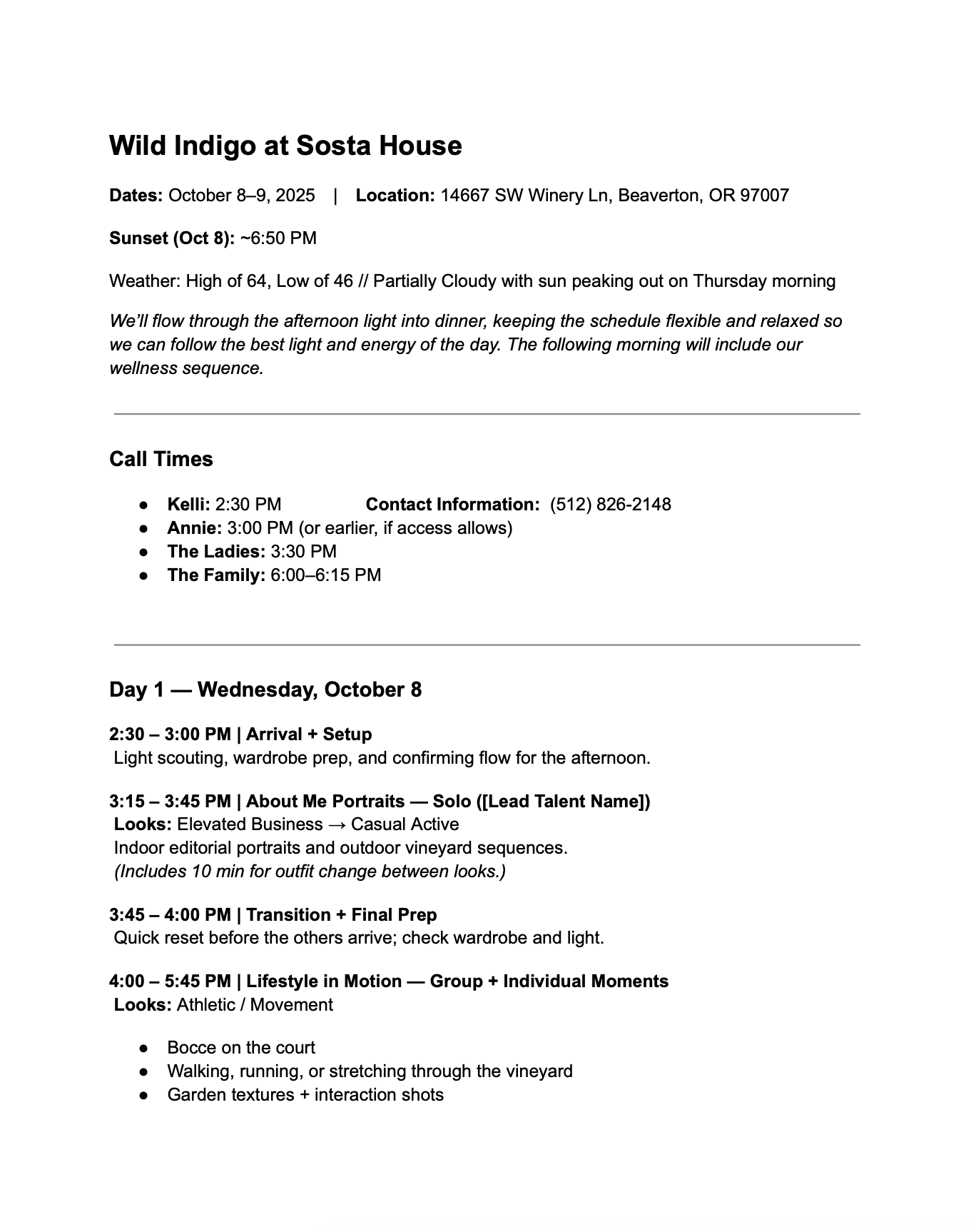
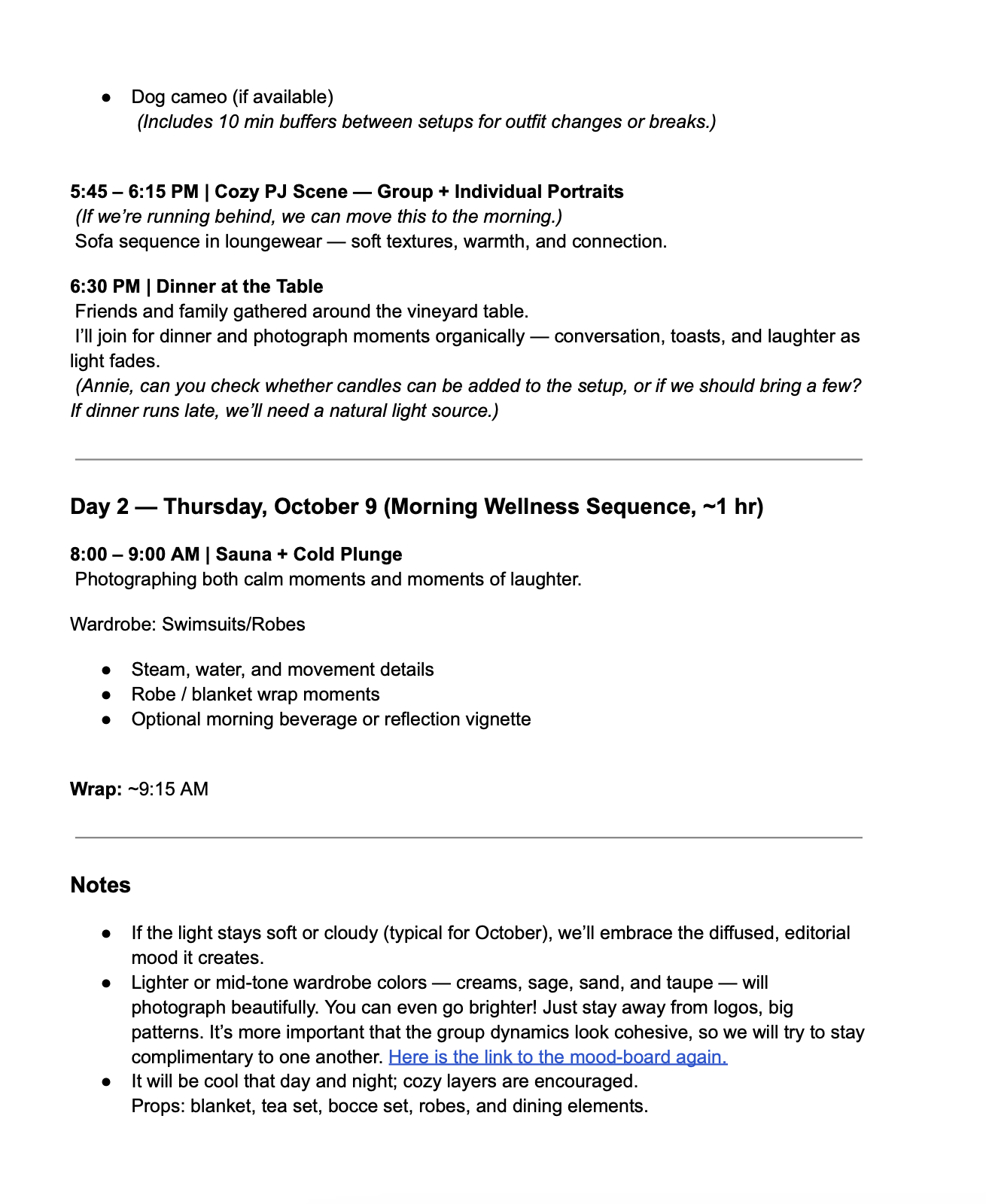
Client Production Guide: Brand Photography Project
Sample of technical and logistical writing for commercial clients. This document demonstrates my ability to communicate complex creative and operational information clearly—a skill directly applicable to healthcare communications where I'd translate between clinical teams, patients, and stakeholders.
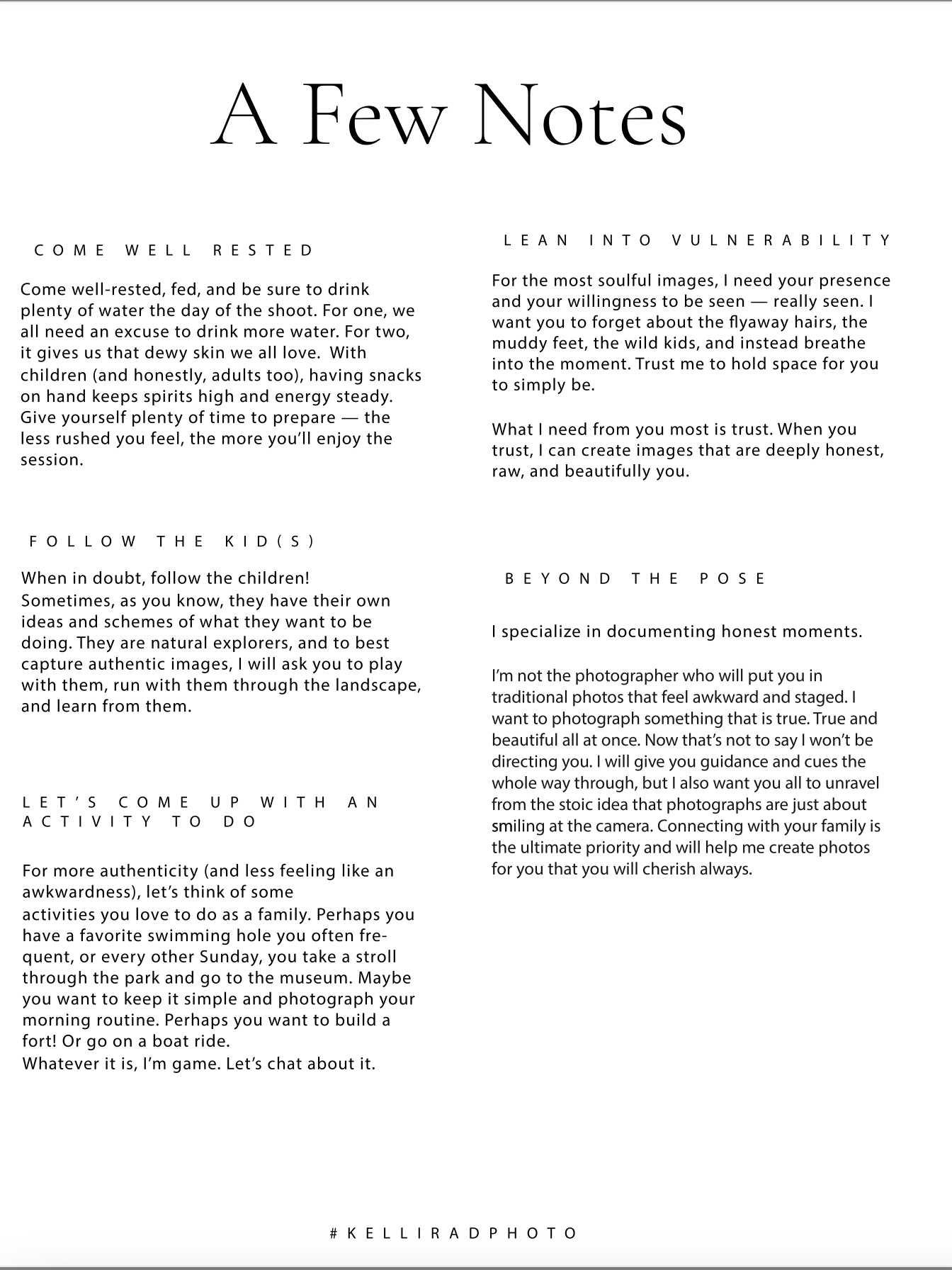
Client Education Guide: Family Photography Sessions
Educational guide created for photography clients preparing for sessions. This document demonstrates my ability to translate a potentially anxiety-inducing process into clear, accessible steps—anticipating concerns, building trust, and empowering people to feel prepared. The same principles apply to creating patient education materials: warm tone, accessible language, addressing both practical and emotional needs.



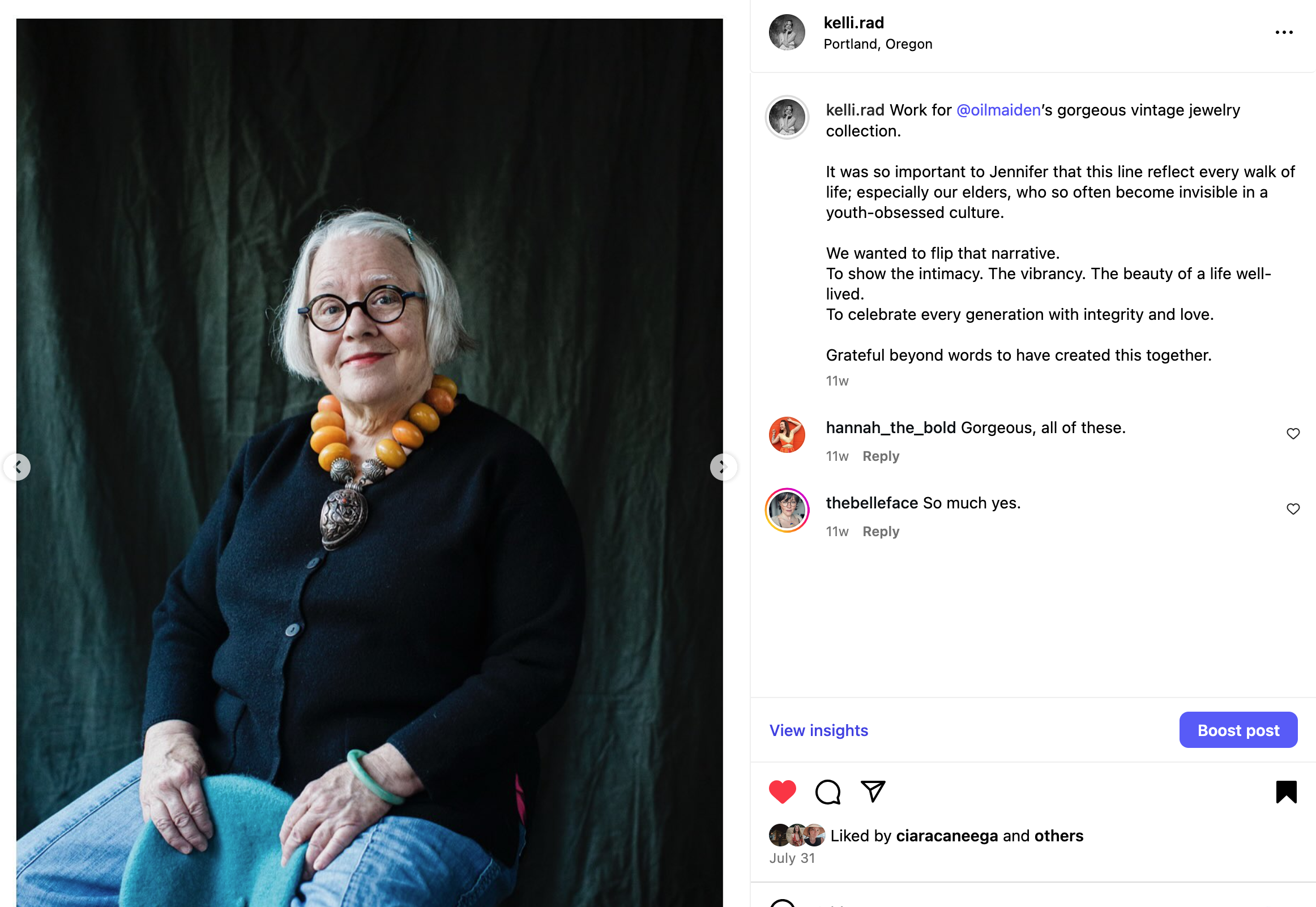
SOCIAL MEDIA
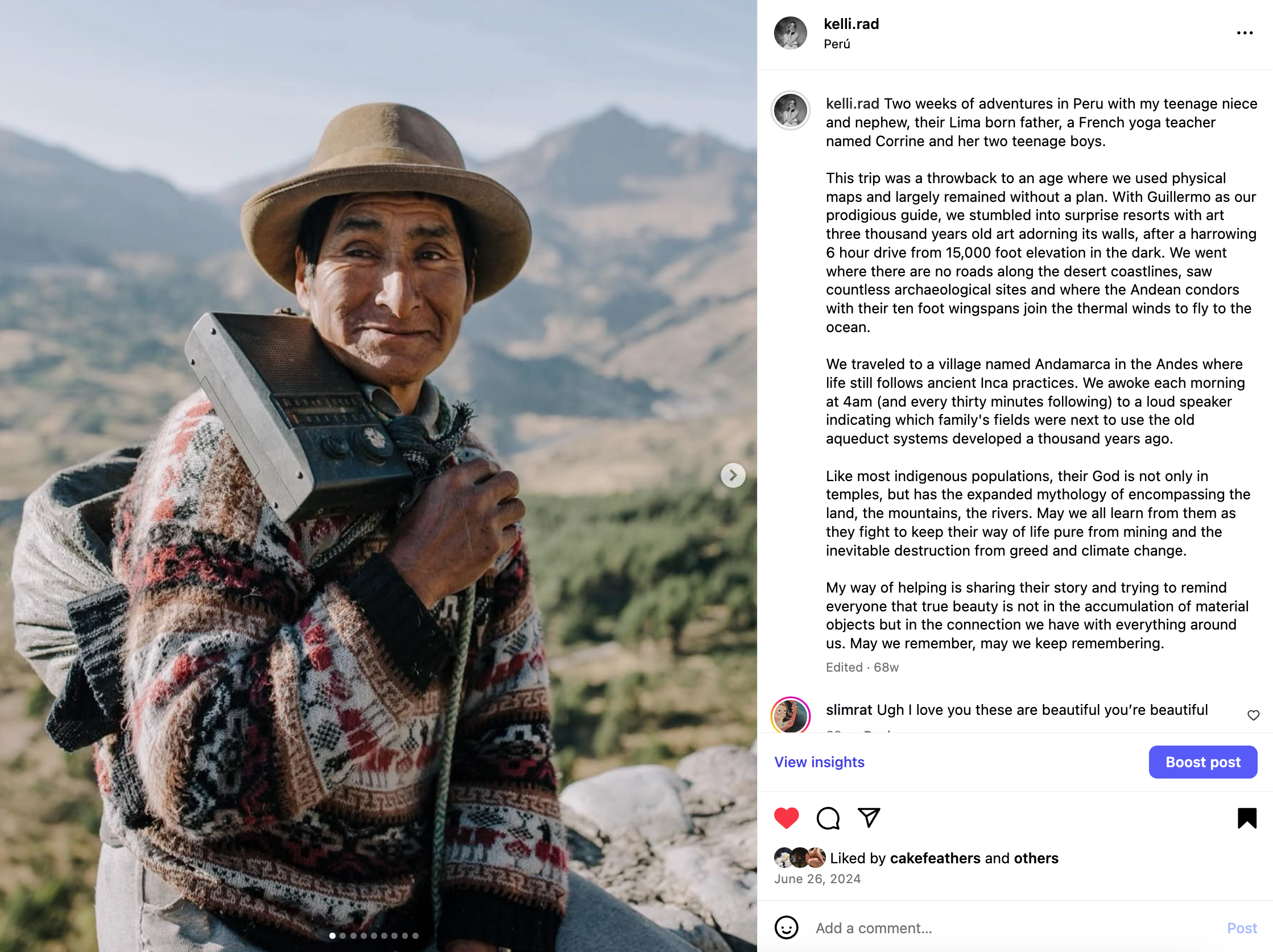
Instagram posts combining photography with narrative captions. These demonstrate my ability to create engaging content that connects audiences to social themes—celebrating marginalized voices, honoring elders, and centering dignity in visual storytelling.
Ready to view my photography or videography? Choose your adventure.